How Old Fort Got Its Name: A Short Walk Through Town History
The fort on Mill Creek
In 1776, colonial militia built a fort on land owned by a settler named Samuel Davidson. Davidson’s Fort sat on Mill Creek at the far western edge of North Carolina, right up against Cherokee lands. For a while it was one of the last outposts before the frontier.
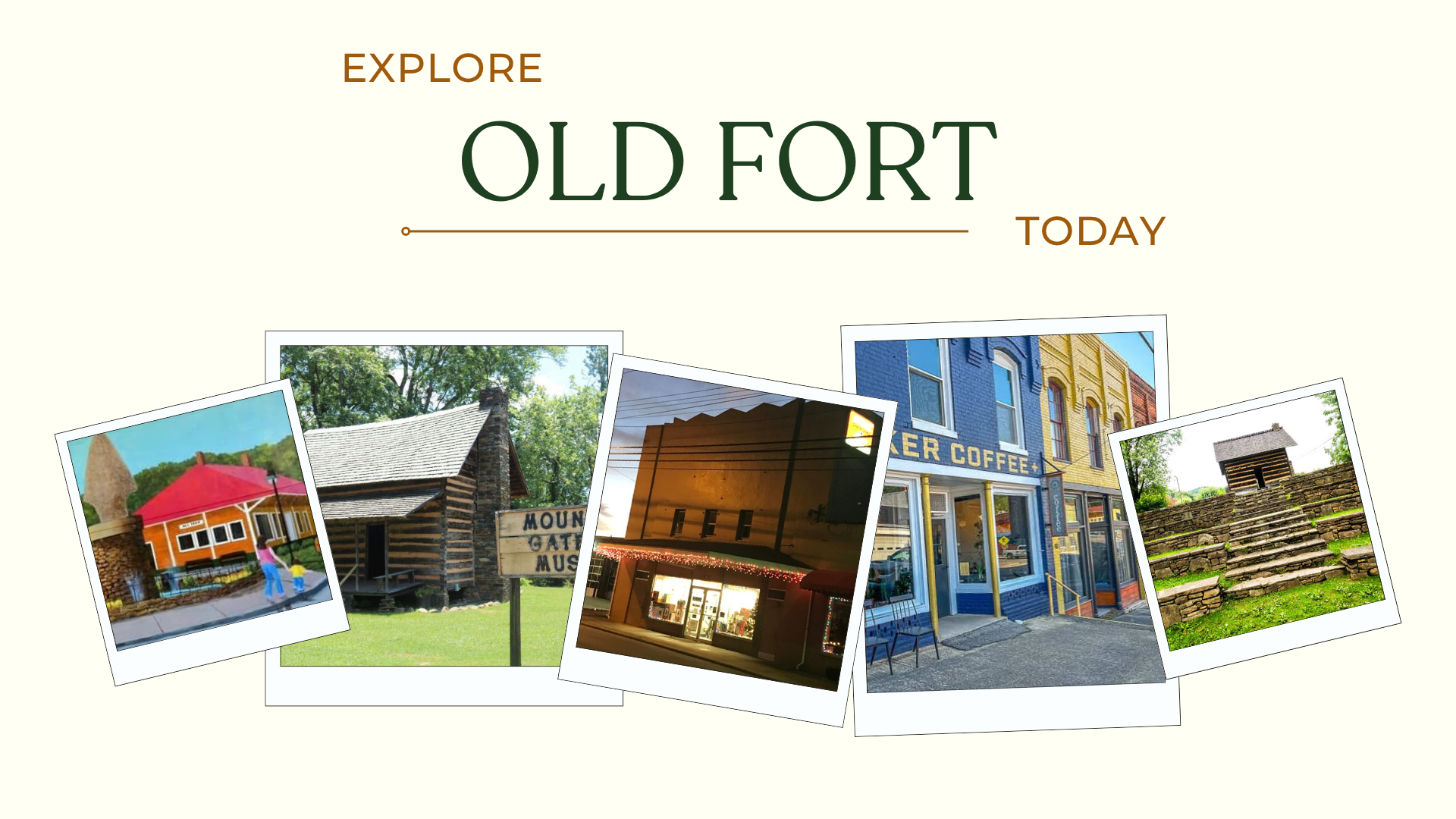
The original fort is long gone, but local volunteers have built a replica at Davidson’s Fort Historic Park (140 Bud Hogan Dr). It’s open the third Saturday of every month from 10 a.m. to 4 p.m., and admission is by donation. Watch for special weekends like the 18th Century Market Faire, when re-enactors fill the grounds and you can get a real feel for frontier life.
From Catawba Vale to Old Fort
When the railroad came through in the 1800s, the little settlement around the old fort started to grow. A depot and a hotel went up, and in 1872 the town was incorporated under the name Catawba Vale. That name lasted about a year. In 1873, folks made it official: this place would be called Old Fort.
The railroad and the people who built it
The railroad climb over Old Fort Mountain is one of the steepest in the East, and the people who built it paid a heavy price. Much of the work was done by incarcerated men, many of them Black men jailed under unjust laws. More than 100 of them died during construction. It’s a hard part of our story, and an important one to remember when you look up at those tracks.
One tribute to those workers is Andrews Geyser (2111 Mill Creek Rd), a short drive up the mountain. The railroad built the first fountain around 1885 at its Round Knob Hotel so passengers had something to look at on the long climb. It ran on gravity alone, fed by a mountain spring, and could shoot water as high as 80 feet. After the hotel burned in 1903, New York banker George Fisher Baker rebuilt it and named it for his friend Alexander Boyd Andrews, a railroad vice president.
Hurricane Helene damaged the geyser in 2024, and it isn’t running right now. It’s still a pretty, quiet spot, and the plaque there tells the story.
The Arrowhead Monument
Right in front of the Old Fort Train Depot (25 W Main St) stands a 14.5-foot pink granite arrowhead. It was first put up to honor the town’s founders. Today it stands for peace between early settlers and the Cherokee and Catawba people who lived here long before them. Walk around it and you’ll find a dedication plaque on one side and a carved profile on another.
The Mountain Gateway Museum
If you only have an hour for history, spend it at the Mountain Gateway Museum (78-C Catawba Ave). It tells the story of mountain life in Western North Carolina, from the earliest people here through the frontier days and into modern times. Admission is free.
The museum’s longtime stone building on Water Street is being repaired after Helene, so for now it’s in a temporary space on Catawba Avenue. Current hours are Tuesday through Saturday, 10 a.m. to 4 p.m. The museum also hosts Pioneer Day, a free festival with mountain crafts, music, farm demonstrations and games for kids.